

What Physical Characteristics Distinguish High-Level MMA Fighters?
There is still little research regarding physical preparation and MMA. However, there has been a large uptick in the past 7 years, which is most relevant to today's style of MMA.
The best way to determine whether a physical quality is important for MMA is to compare higher and lower-skilled fighters.
If a physical quality is greater within a higher-skilled cohort, it is likely important for MMA success.
When 15 semiprofessional MMA fighters were compared to 14 amateurs, this is what they found [1]:
- •Greater back squat 1RM relative to bodyweight (1.84 vs. 1.56 x bodyweight).
- •Greater relative impulse (force x time) during loaded and unloaded jumps.
- •Greater impulse at 300 ms during loaded and unloaded jumps (producing more force faster).
- •Greater peak power, velocity, and force for each jump.
- •Greater peak rate of power development.
- •Similar 1RM relative bench press and isometric mid-thigh pull between groups.
This shows MMA requires high-force actions and having a stronger lower body is important for performance. Further, being able to produce high forces at varying speeds underpins many MMA sporting actions.
Upper body strength may not be as important since force is typically generated from the lower body and transferred to the upper body.
The same subjects were also analyzed during jump performance [3]. Here's what they found:
- •Higher-level MMA fighters jumped higher and generated greater force, velocity, and power.
- •They also had shorter eccentric phases meaning faster eccentric loading, and are able to produce more force faster than low-level MMA athletes.
It means you should develop the ability to rapidly go from an eccentric to concentric contraction to maximize force generation during striking and grappling. This is vital in MMA as you have limited time to execute techniques before an opponent can react to defend or evade.
Legendary Russian sports scientist Yuri Verkhoshanksy has an excellent visual representation of this concept he calls the "working effect." It's a force-time graph representing impulse, which is the product of force and time.
But to keep this simple, Verkhoshanksy defines the working effect as "the amplitude of the impulses of force overcoming the external resistance force."
This could be bodyweight, external opposition, or external implement. But what you need to know is this:
An increase in the working effect requires increasing maximal force output and/or increasing time of the force generated to overcome the external resistance.
However, increasing the time to produce force is not advantageous to the MMA fighter. Taking longer to punch, kick, or shoot makes it easier for your opponent to slip, block, or sprawl.
Therefore, MMA fighters must develop the ability to produce maximum force in shorter time frames, as demonstrated by the high-level MMA fighters in these studies.
What About Conditioning?
This time, high and low level MMA fighters performed 10- & 20 m sprints, 12 x 20 m sprints every 20 seconds for repeat sprint ability, and a Yo-Yo intermittent recovery test level 2 for endurance. Here's what they found [2]:
- •Higher level MMA fighters had faster 20 m but not 10 m sprint times.
- •They were faster in the repeated sprint test across all sprints.
- •They covered more distance during the Yo-Yo test.
Importantly, the practical differences between the high and low-level MMA fighters during these conditioning tests compared to the strength and power tests were much lower, indicating strength & power characteristics may be a better determinant of MMA success.
That's not to say conditioning isn't important. But it doesn't seem to indicate high and low level MMA fighters as well.
We can look at the aerobic capacity of MMA fighters based on their VO2max. Just be aware VO2max doesn't predict endurance performance and is limited by central function (the heart's ability to pump blood).
Regional Brazilian MMA athletes showed very poor VO2max values at 44 ml·kg-1·min-1 indicating generally poor aerobic conditioning in these athletes [4].
While regional and amateur MMA fighters in the USA showed VO2max values of 55 ml·kg-1·min-1 ranging between 50 and 60 in the welterweight division [5].
This seems to be on par with what the UFC PI indicates as the average VO2max in their elite MMA population [6].
Another study in elite MMA (it was not mentioned what they considered elite) found 5 MMA athletes had VO2max values of 60 ml·kg-1·min-1 in the welterweight division but it wasn't disclosed the individual values so it's difficult to draw conclusions from such a small sample size [8].
Further, a case study on Top 2 Australian ranked MMA fighter observed a VO2max value of 56 ml·kg-1·min-1 in the middleweight division putting him within the 68% of the UFC population in that weight class [9].
These values are also similar to those found in elite amateur boxers indicating the importance of the aerobic energy system in MMA.
However, some athletes in the UFC display even greater aerobic performance. Within the same welterweight division, the top 2.5% of fighters have VO2max values greater than 65 ml·kg-1·min-1.
Elite lightweights and flyweights in the top 2.5% have VO2max values greater than 67 and 69 ml·kg-1·min-1 respectively.
A Polish UFC middleweight has been observed to have a VO2max of 58 ml·kg-1·min-1 placing him in the top 16% of UFC middleweights in terms of aerobic conditioning [10].
For reference, elite endurance triathletes have VO2max values ranging between 70-80 ml·kg-1·min-1 [7].
Research is far scarcer regarding anaerobic qualities in MMA. This means we will have to resort to single-athlete case studies.
The Australian ranked MMA fighter referenced earlier was also put their anaerobic power and capacity testing for the upper and lower body [9].
This athlete showed absolute upper and lower body peak power of 841 and 934 Watts for the 30-second Wingate test.
This translated to 9.7 and 10.4 W.kg when calculated relative to body weight. Anaerobic capacity for the upper and lower body came out to 542 and 711 W, respectively which translated to 6.1 and 7.9 W.kg when calculated relative to body weight.
Another case study investigated a Top 10 UFC Light Heavyweight who displayed similar lower body anaerobic power in relation to body weight of 10.4 W.kg with absolute anaerobic power topping out at a whopping 1075 W [11].
Only some wrestlers have been shown to display similar absolute power outputs [12].
Another case study with a UFC middleweight found upper body absolute anaerobic peak power to be 720 W which translated to 7.1 W.kg when made relative to body weight [10]. Anaerobic capacity was 630 W translating to 8.1 W.kg relative to body weight.
This middleweight displayed less anaerobic power relative to body weight but greater capacity relative to body weight compared to the Australian middleweight.
Unfortunately, we don't have any data on non-elite MMA athletes to compare to. However, lower body anaerobic power and capacity in sports such as wrestling and boxing show similar values to our case studies listed above relative to body weight [13].
It is interesting to note that the Polish UFC middleweight showed extremely high upper body anaerobic capacity values of 8.1 W.kg which exceeds lower body values in almost all sports such as boxing, hockey, basketball, and soccer [13].
Perhaps this specific athlete has a strong wrestling background and has developed the ability to handle high-power outputs for long durations.
Overall, the limited research suggests that MMA is a mixed energy system sport requiring a very well-developed aerobic energy system to not only handle fighting 3 to 5, 5-minute rounds but to also facilitate recovery between rounds.
Further, anaerobic qualities may differ by the style of fighter where wrestling based MMA athletes potentially show greater upper body anaerobic capacity.
Activity Profile Of An MMA Bout
The work-to-rest ratio of regional-level MMA has been found to be 1:2 to 1:4 [14]. Work time ranged from 6 to 14 seconds, while "rest" time lasted 46 to 62 seconds. Data from the UFC seems to align with these findings work to rest ratio was found to be 1:3 to 1:4 [6].
They found that the work period was approximately 8-14 seconds of high-intensity effort, with lower-intensity effort lasting 3 to 4 times longer [6].
We can sum these findings up to suggest that a 1:2 to 1:4 work-to-rest ratio is valid regardless of the level of competition.
What Influences Success In MMA Bouts?
351 UFC fights were analyzed from 2014 to ascertain what technical components influence a winning performance [15]. They found winners were able to increase activity from round to round, whereas losers decreased activity.
Winners spend the first round 'reacting' to an opponent and 'feeling them out' and then transition into an 'anticipatory' mode where they are better able to read their opponent. In contrast, losers reduce their key actions after the first round.
Winners are better able to anticipate their opponent's attacks making developing technical skill and agility important qualities. On the ground, winners had greater submission attempts, advances to half guard, side control, back, and mount position than losers.
What Does This All Mean?
I'll sum all of this up into my philosophy for strength and conditioning for MMA.
Develop the ability to repeat high-intensity efforts.
That's it.
The question becomes, how do you do that?
No, it's not CrossFit or random puke-inducing circuits with burpees. I'll explain more in a bit.
Assessments
Just because you reach a certain testing benchmark does not mean you're suddenly a better fighter. However, becoming stronger and faster with better conditioning can help realize your skillset.
Here's some basic thresholds that can be helpful for dictating the direction of your training.
- •Back squat >1.6 x bodyweight
- •Vertical jump >45 cm (17.7")
- •Reactive strength index (40 cm box) >2.5
- •Maximal aerobic speed >4.2 m/s
These are what I'd consider absolute minimum thresholds to hit for most fighters based on research and my own experiences. Here's how a decent range will look:
- •Back squat: 1.6 - 2.0 x bodyweight
- •Vertical jump: 45 - 50 cm (17.7 - 19.6")
- •Reactive strength index (40 cm box): 2.5 - 3.0
- •Maximal aerobic speed: 4.2 - 4.5 m/s
Does this mean your physical training tasks are done? No, these are within the average range of most UFC fighters.
But it gives a few basic benchmarks to aim for. How do you measure each one?
Back Squat: Multiply your bodyweight by 1.6 - 2. It should equal or be under the load you squatted. For example, if you weigh 200 lbs, you should be able to squat between 320 - 400 lbs.
Vertical Jump: Stand against a wall and reach your hand marking the wall with chalk. Jump and mark again. Measure the distance. Not an error proof exercise but an easy no equipment field test. The My Jump Lab is the best phone app for this.
Reactive Strength Index (RSI): Stand on a 40 cm box, step off. When you hit the ground, jump as high as you can as quickly as possible. Ground contact time should be minimal. I like to aim for <250 ms on the ground which you can measure with the My Jump Lab app. There's a learning curve to this exercise. Here's what it looks like: https://youtu.be/F_uhvTxSH1k
Maximal Aerobic Speed (MAS): Pick your mode or equipment for the test. Running, cycling, and rowing are the best options. Perform a 1200 m time trial. If you start too hard, you'll ruin the test. Gotta pace yourself correctly. Divide the distance by the time in seconds to get your MAS number. For example, 1200 / 300 = 4 m/s. Your MAS will be different between the exercises chosen. The benchmark is based on running but is very similar for rowing.
How Do Testing Results Influence Your Program?
Most people test then forget about it. Testing must influence your training. Here's some general guidelines you can follow:
- •Under strength/power thresholds: Focus on maximal strength with low-volume extensive plyometrics.
- •In range: Blend of maximal strength and power-based exercises.
- •Above thresholds: Minimal/low volume of maximal strength with higher volumes of power-based exercises.
You may have a 2 x bodyweight squat but lack reactive strength. In this case, you'd perform most of your training towards various plyometric exercise with less maximal strength volume as an example.
For MAS:
- •Under threshold: May need more volume. A long and short HIIT approach may be preferential.
- •Within range: Compliment with sprint interval training.
- •Above range: Mainly a sprint interval training approach (discussed below)
All conditioning includes a day or two of pure off-feet cardio sprints for 6-10 seconds with maximal rest (60-180 sec).
Strength Training For MMA
This section covers everything do to with weight room based training. This includes strength, hypertrophy, speed, and power development.
Fundamentals Of Strength Training For MMA
Everything we do in the gym to prepare for MMA hinges on this simple graph (and other adaptations, but I like this visual):
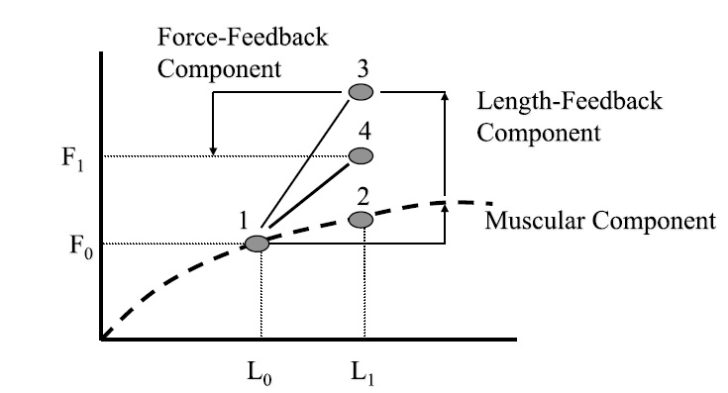
It's taken from a research paper by Paavo Komi [16]. It shows the change in force by change in muscle length. Essentially, the force produced during a muscle contraction.
For a given change in muscle length (e.g., a bicep curl), we have an increase in force generated from circle 1 to circle 2. We then have the length feedback component known as the muscle spindles.
It is sensitive to the rate of stretch and "excites" the muscle to increase force production to circle 3. But the force feedback mechanism, known as the Golgi tendon organ, doesn't like this.
It pumps the brakes as a protective mechanism to dampen force production, leaving you at circle 4 for the final force output. The goal is to raise circle 4 as high as possible for a given change in muscle length.
How does heavy strength training and jumps/plyometrics help?
We can enhance the sensitivity of the muscle spindles through plyometric training. Improving sensitivity increases excitation and, therefore, force generation.
Maximal strength training desensitizes the Golgi tendon organ so it doesn't pump the brakes so early.
Untrained individuals have the Golgi tendon organ kick in too early, and this is why beginners can't express their maximum outputs in the gym. Desensitize this response by lifting heavy loads.
This is one of the adaptations showing why you MUST perform heavy resistance training AND high-velocity strength training.
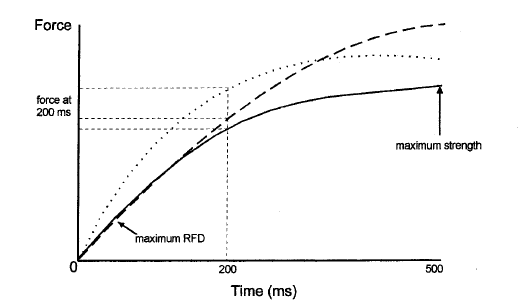
Here's another graph by Kraemer and Newton, further illustrating my point and why I'm constantly preaching you can't follow a bodybuilding or Powerlifting program for MMA [17].
All sporting movements are constrained by time. As mentioned earlier on the "working effect," we must improve the ability to generate high forces in short time frames. Now, this doesn't apply as greatly to grappling actions where slow, grindy movements give almost infinite time to apply forces compared to striking actions.
Boxing and Muay Thai techniques occur within 50 - 300 ms [18]. Hence the importance of high-velocity strength training and plyometric exercises.
The graph shows different training types. The solid line represents untrained subjects. The dashed line represents heavy resistance-trained subjects (e.g. Powerlifters). The dotted line represents light resistance power-trained subjects (e.g. track athletes).
While heavy resistance-trained subjects display the greatest force, they don't display the greatest force generation at lower time points, as denoted by the 200 ms mark.
Again reinforcing the point of performing heavy resistance training AND power training. But can't you just lift the bar faster as many strength coaches will say?
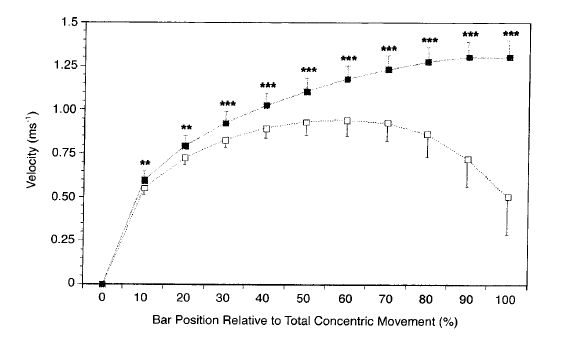
Moving the bar faster is not the same as leaving the ground when jumping or projecting a medicine ball when throwing.
The black squares represent a bench throw while the white squares represent the bench press performed as fast as possible. Depending on the load, you can spend 40 - 50% of the concentric phase decelerating the barbell.
Whereas throwing the barbell allows you to continue accelerating, which powerful sporting movements mirror.
What exercises show this kind of velocity curve?
- •Plyometrics
- •Jumps
- •Throws
- •Olympic lifts
There are many other muscle architecture and neuromuscular adaptations to each type of resistance training but this overview gives you the most important bits of information about why.
Why Full Range Of Motion Is King
Muscle fiber contractile velocity is proportional to its length. Meaning how quickly your muscles contract is determined by the number of sacromeres (blocks of muscle fibers) are in a row. Muscle fiber type also plays a role here.
Sarcomeres shorten at 2x the muscle fiber length per second [19]. For example, having 10 sarcomeres in a row would shorten at 20 fiber lengths/second, whereas 5 sarcomeres would only shorten at 10 fiber lengths/second.
How do we add more sarcomeres? Eccentric training is a potent stimulus for this. Think Nordic curls for the hamstrings and weighted negative pull-ups for the upper body.
But full range of motion lifting is another method that has been shown to be superior to partial ranges of motion lifting [20].
Contractile velocity isn't the only benefit of increasing sarcomere length. You shift the angle of peak torque up and to the right, meaning you produce more force at longer muscle lengths [21].
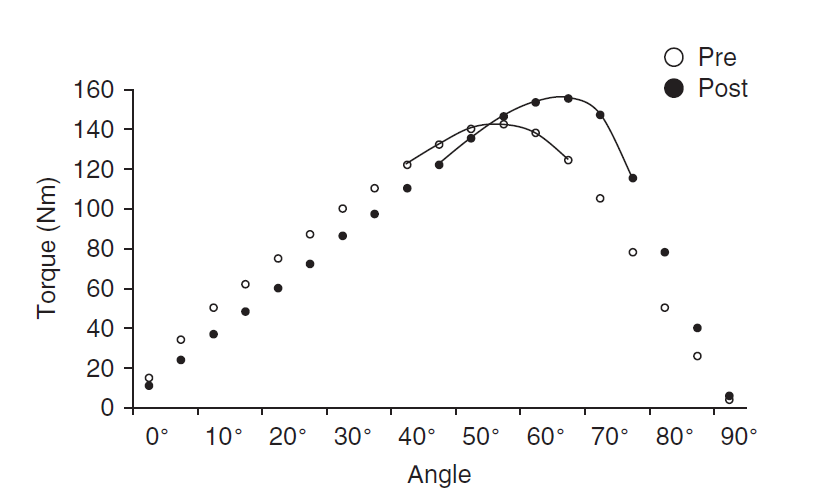
This has the potential to reduce your risk of injury in susceptible muscle groups like the hamstrings.
It's why full range of motion resistance training IS mobility training. And no amount of static stretching will get you there (effectively).
Exercise Selection For Building Strength Applicable To MMA
There are hundreds of Instagram and TikTok "gooroos" shilling you entire training programs with "specific" MMA exercises. Fuck them.
Specificity exists on a spectrum. I'm not one to say there aren't more specific exercises than others. But our goal in the gym is to enhance strength, speed, and power (and sometimes muscle mass). Most of these exercises you're fed on social media don't have the loading or intent behind them to elicit ANY adaptation.
And that's all it really is. Are we providing the body with a strong enough stimulus to adapt?
The easiest way to think about exercise selection is to start with the 7 basic movement patterns:
- •Squat
- •Hinge
- •Push
- •Pull
- •Lunge
- •Twist
- •Carry
For MMA, I would add:
- •Throw
- •Jump
Should every session have all of these? No. But your training week should cover most of these most of the time.
Strength Training Program Design For MMA
For a busy MMA athlete, twice a week in the gym is more than enough. It's all you have time for anyway. If you're a recreational MMA athlete who goes to class for the cardio and social benefits and wants to look good, then three to four days in the gym is potentially better.
But I'm going to assume most of you reading this fall into the first camp. MMA fighters who's main focus is getting better at MMA.
Since you're in the gym twice a week, they should be full-body sessions. Upper/lower splits can work and, in my experience, can be quite good for older athletes (if you're careful with the volume).
But full body sessions allow you to hit muscle groups twice a week, which is generally superior for strength development.
How should these sessions look? Here's a template you can follow:
- •Warm-up circuit
- •Jumps/plyometrics/throws (don't have to do all 3)
- •Full body power exercise
- •Heavy lower body
- •Upper push
- •Upper pull
- •Core/carry/grip (don't have to do all 3)
This is a basic template that can change depending on the main goal of training. However, you can use this if you're after speed and power or maximal strength.
Just reduce your volume of speed and power exercises if strength is your goal and vice versa if you're going after speed and power.
You can also make one day more heavy strength orientated and the second day more power orientated. Both work, up to you how you want to plan your training. I like the way I presented as if you can only get into the gym once that week, you've covered most of your bases.
You'll notice I haven't blocked strength training into only strength, or only hypertrophy, or only speed and power. It's because I don't believe in block periodization for mixed sports like MMA.
Yes, you can target one quality to maximize training effectiveness. But you blunt and diminish other important qualities you need for MMA. By the time you get to your 6th week of power/speed training, it's been months since you've done any strength or hypertrophy exercise.
Yes, there is carryover between them all. But you need more than carryover. It's why I take a vertically integrated approach to training. It means you cover all qualities within a training week.
It doesn't mean you perform maximum-volume jumps and heavy squats. It means you prioritize the quality you want to improve and reduce the volume of the others. But they are always there.
If you spend 8 weeks in a hypertrophy phase, then 8 weeks performing maximum strength, you can't hit the ground running in week 17 performing intense plyometrics and jumps. That's a recipe for injury.
Periodization Strategies To Peak For Fights
A simple heuristic to follow is to reduce total volume, range of motion (in some exercises), and focus on speed and power based exercises.
It's about having little to no residual fatigue after your strength training so you have more energy for hard MMA technical training sessions.
You should feel like you want to do more when you're done. That is a good sign you've done the session correctly.
Conditioning For MMA
Adaptations vs. Working Out
The biggest mistake is doing your conditioning just to get a sweat and breathe hard. This is 99% of what you see in fight camp build-up videos and other pros doing.
Conditioning sessions should target specific adaptations depending on the time of year and your strengths and weaknesses. The adaptations are dictated by intensity. The general spectrum looks like this:
Low-intensity = preferential central (heart) adaptations.
High-intensity = preferential peripheral (muscle) adaptations.
Moving across the intensity spectrum will give you a mix of both.
MMA Needs Analysis
Data from the UFC Performance Institute, as well as regional MMA stats, show that the typical effort-to-pause ratio varies, often ranging from 1:2 to 1:4. This means that for every second of high-intensity effort, there's two to four times as much rest.
It's important to note that while these are averages, they shouldn't dictate all aspects of your conditioning program; they merely offer a guideline to understand the general pacing of an MMA match and the potential energy system contributions.
Time To Ditch The Traditional Energy System Model
You're probably familiar with the graph below.
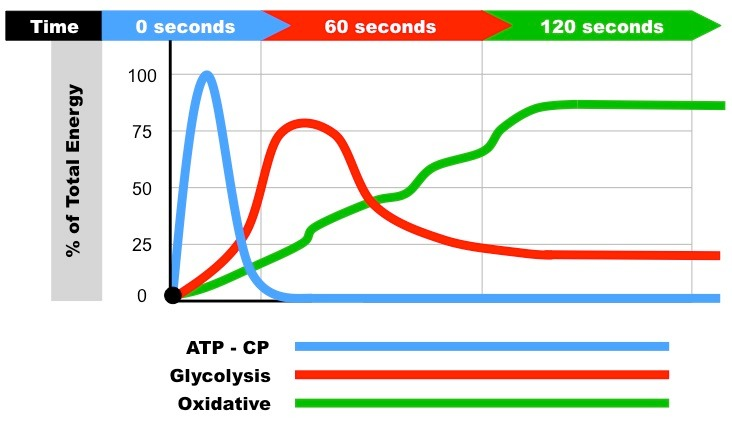
It shows the traditional energy system model to exercise. It looks something like this:
- •A-lactic/ATP PCr: 0-10 sec
- •Anaerobic glycolysis/lactic: 10-60 sec
- •Aerobic: 60 sec onward
The traditional energy system model assumes two things:
- •That energy systems work in isolation
- •That energy is provided with or without oxygen
Here's why we can't label certain exercise protocols as purely aerobic or anaerobic. And why we can't label the sport of MMA as an aerobic or anaerobic dominant sport.
Physiology Of A Single Sprint
This graph by Hargreaves & Spriet (2020) illustrates my points in one picture [44].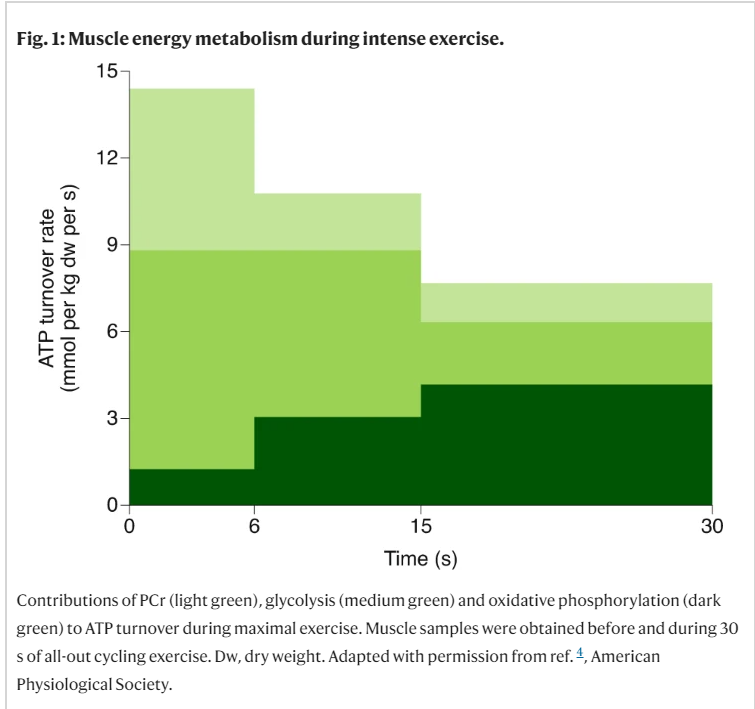
It shows a single 30-second sprint with the energy contributions from the 3 different energy systems.
The light green is the alactic ATP-PCr energy system, the moderate green is glycolysis or anaerobic lactic, and the dark green is oxidative or aerobic.
It shows one single 'maximal' 6-sec sprint is performed with approximately half the energy originating from 'phosphagens' (alactic) while the other half is originating from 'glycolytic' pathways.
"Of note, aerobic ATP production is also activated during very intense exercise, and 70-100% of the VO2max can be reached in an all-out 30-sec sprint.. Whereas very little aerobic energy is provided in the first 5-10 sec, ~50% of the energy contribution in the last 5 sed of a 30-sed sprint is from oxidative processes."
This shows how there's no purely aerobic or anaerobic exercise. Even short sprints show a sharp drop in muscle oxygenation (more on this soon) with energy contributions from the aerobic energy system.
But MMA isn't a sport of one all out effort. It's a sport of multiple efforts.
Physiology Of Multiple Sprints
Gaitanos and his colleagues in 1993 had subjects perform brief sprints of 10 x 6 sec w/ 30 sec recovery and found glycolysis contributes to 44% of total anaerobic ATP energy during the first sprint, but only 16% by the 10th sprint [45].
The authors theorized aerobic metabolism takes over the regeneration of energy as subsequent sprints are performed.
As each repeated effort occurs, more oxidative processes regenerate energy as muscle glycogen is used.
As Mark Glaister states in his 2005 paper "Multiple Sprint Work," "Predominantly PCr and exclusively aerobic processes for recovery."[46]
However, this can differ based on training background. For example, Hamilton et al. (1990) put team sport and endurance athletes against each other. Both groups performed 10 x 6 sec w/ 30 sec recovery [47].
Endurance athletes exhibited a greater ability to resist fatigue which was associated with higher rates of oxygen use during sprints (aka aerobic energy).
A 1995 study by Granier and his colleagues reinforces this with the Wingate test comparing 50-200 m sprinters and 800-1500m middle distance runners [48].
The energy contributions from aerobic/anaerobic processes were similar between groups. However, the sprinters had far greater contributions from anaerobic contributions while the middle distance runners had more aerobic contribution.
But there's a big caveat to this.
The sprint based athletes had greater power output during the sprints.
Which brings us to what I believe is the SINGLE most important quality for MMA.
Repeating High-Intensity Efforts
This brings us to repeated high-intensity efforts. The key to MMA performance. You must be able to display high levels of power. It's your ability to repeat maximal efforts, not repeat slow efforts. I paraphrase this quote from somewhere:
"I don't care how many times you can't dunk the basketball."
So, endurance based athletes don't fatigue as fast, but can't even dunk the basketball on the first rep.
Typically, targeting low-intensity conditioning is seen as the gold standard for repeating high-intensity efforts within repeated sprint ability [24][25].
The mechanism underpinning this is the heavier reliance on aerobic processes to regenerate phosphocreatine (PCr) stores between sprints. In short, PCr is needed to convert ADP back to ATP as the muscle's energy source for contractions.
But not all research agrees with some papers only showing moderate correlations between VO2max and repeat sprint ability [26]. One reason this discrepancy may exist is the effort given by the test subjects. For example, one paper stated their subjects tended to save energy to counteract fatigue, as shown by the first sprint of each block being slower than their maximal sprint effort [24].
However, MMA is not a sport of sprinting. And high-intensity efforts often involve working against an opponent of similar weight when grappling or throwing a flurry of strikes mixed with clinching and bullying your opponent.
This is where the term repeated high-intensity effort was born and includes any effort, including sprinting like wrestling, scrambling, throwing, sweeping, and striking [27]. Interestingly, the relationship between repeated sprint ability and RHIE is poor, showing the strenuous demands of non-running activities like wrestling [28].
A study in rugby league demonstrated this using GPS to isolate and quantify collision demands from running. They found a greater reduction in collision performance (tackling) than speed, with a 14% difference [27].
Therefore, enhancing repeated high-intensity efforts will take more than hitting the pavement. You need power! And the ability to sustain it repeatedly.
What Does This All Mean?
This brings us to moving from the traditional energy system model to an updated model of central and peripheral limitations. What does central and peripheral mean?
Central refers to adaptations to the heart.
Peripheral refers to adaptations to the muscles.
To be more precise, we could use systemic vs peripheral as systemic would also include the lungs.
The greater reduction in tackling performance seen in the rugby league study is likely due to greater peripheral demand.
The question becomes, can we address the limitation vs. blindly trying to target energy systems? Because if we throw a boat load of zone 2, steady state cardio to improve recovery between efforts but they are peripherally limited, you won't see much improvement in conditioning (more on this soon).
Evan Peikon gives an observation on central vs. peripherally limited athletes on the Sweet Science of Fighting podcast.
Peripherally limited athletes tend to have the range of loads during maximum lifts (e.g. 1-10RM) closely coupled and/or have a strong endurance training background where longer and shorter race paces aren't much different.
For example, an ultra-marathon and half marathon running pace.
Centrally limited athletes tend to come from strength sports/lifting backgrounds with large discrepancies between maximum rep loads.
However, combat sports are most likely limited peripherally (including MMA). This is the opinion (backed by their research and application) of Dr. John Babraj and Andrew Usher, whose protocols I'll go into soon.
Ed Baker, who was also on the podcast, mentioned combat sports are likely more peripherally demanding than centrally demanding.
We can also use anecdotes, such as when you had an absolutely disgusting sparring or shark tank session.
Your heart has little issue reaching maximum to deliver as much oxygen as possible. It's your muscles that give out.
Usher and Babraj showed this recently in professional boxers [23].
They found impaired mitochondrial activation, decreased rate of muscle oxygen desaturation across rounds, indicating poor recovery between rounds, and a decrease in the rate of muscle oxygen saturation across rounds, indicating incomplete muscular recovery between rounds.
So, how do we target central and peripheral adaptations? Again, nothing is in isolation so you're never purely getting one or the other.
Lower intensity = predominantly central
Higher intensity = predominantly peripheral
Zone 2 steady state cardio is typically the way most coaches prescribe centrally targeted exercise.
Why Roadwork Isn't Enough
I'm going to touch on a controversial topic. You don't need to run. You don't need to wake up at 5 am to log your miles. Zone 2 roadwork is likely not enough to significantly move the needle for combat sports performance.
Long and short high-intensity interval training (HIIT) are likely better options.
The problem with zone 2 comes where more volume (i.e. time) is needed to make further progress.
Does that mean we abandon zone 2? Probably since we get the same adaptations from HIIT by accumulating time at VO2max. Your MAS is an easier measure than VO2max and is more actionable for your conditioning.
And you're getting enough zone 2 from technical training most likely. The main reason zone 2 cardio is pushed is eccentric hypertrophy of the left ventricle allowing more blood to fill the heart chamber and therefore, more blood to pump each heart beat.
This is known as stroke volume. Training at or just below maximal stroke volume maximizes filling pressure in the heart chamber, expanding it. Stroke volume increases during rest periods with HIIT (including during work periods) so you can perform shorter, more intense sessions and gain more effective central adaptations.
Further, you are activiting the same molecular pathway for signaling aerobic adaptations with HIIT and steady state cardio.
Sprint interval training is the most intense form of HIIT and targets muscular adaptations to resist fatigue and recover faster between rounds. Coaches much smarter than me have been implementing these with impressive results. I'm not talking sprinting over ground. These are performed on a bike.
There is brand-spanking new research in this domain that no one is talking about (except me... seriously). I broke it down in this video here: https://youtu.be/2gqybBBOYdM?si=l8V7__AH-1GXbhi4
In this cohort of professional boxers (yes, not MMA but I'll explain), it didn't seem that recovery during sparring was limited by the heart but by the muscles [23]. Essentially, you're improving the mitochondria's ability to efficiently upregulate and downregulate from the onset and cessation of exercise.
Therefore, you're able to sufficiently re-oxygenate the muscles between rounds or high-intensity efforts. This becomes more apparent (and important) in MMA with grappling actions that require more muscular strain than pure striking.
It is likely that MMA is more peripherally taxing than centrally taxing, meaning conditioning should likely be geared towards muscular adaptations (once a decent base has been built).
One peripheral adaptation piece to consider is muscle capillarization. These blood vessels are the delivery mechanism for oxygen to the working muscles and mitochondria. A greater capillary network may mean more oxygen diffusing from the blood to the muscles which equals better endurance.
If we go by our intensity spectrum, we'd expect capillary growth would occur at the high-intensity end.
However, the highest capillary-to-muscle fiber ratio is seen in high-level endurance athletes who spend most of their training time performing low-intensity steady-state cardio [29].
Further, shifting to higher-intensity training may reduce the growth of new capillaries or have no effect whatsoever [29]. Yet other research states lactate stimulates the growth of new blood vessels which is raised by high-ointesntiy exercise [22].
To add another layer, your muscle fiber type distribution plays a role in recovery. Athletes who are predominately slow twitch recover faster after high-intensity exercise, whereas fast twitch-dominant fighters may take over 5 hours to recover [30].
Further, high training loads (e.g. hours of zone 2) absoluately crush faster twitch fighters and may do more harm than good.
All of this to say, cover the entire intensity spectrum.
Conditioning System For MMA
This is where it all comes together. You may be confused from the sciencey sections above, but this should (hopefully) clear things up.
Our goal is to accumulate time at around VO2max for central adaptations and use intense sprint intervals for peripheral adaptations. You can use more of one or the other depending on your limiter which you can estimate based on the previous sections.
Here's the guidelines for each modality to cover.
Long HIIT (Central): 2 - 8 x 90 sec to 5 minutes at 90-100% MAS w/ 1-3 minutes passive rest
- •8 x 2 mins @96% MAS w/ 2 min rest between sets.
Modality:
- •Rowing
- •Running
- •Cycling
- •Swimming
Short HIIT (Central): 10 - 60 sec at 100-120% MAS w/ 10 - 60 sec rest (passive or active up to 70% MAS)
- •3 x (5 x 30 sec/30 sec @100% MAS) w/ 2-3 min rest between sets
Modality:
- •Rowing
- •Running
- •Cycling
- •Swimming
__Power Sprint Intervals (Full Recovery): __6 - 10 sec Max Intensity w/ 2-3 mins rest. Maintain power output for all sprints.
- •5 x 7 sec w/ 2.5 mins rest
- •6 x 10 sec w/ 3 mins rest
Modality:
- •Hill sprints
- •Bike sprints
- •Sled sprints
- •Heavy bag power shots
Sprint Intervals (Peripheral): 6 - 30 sec at 1:2 to 1:8 work to rest ratio. Total work time to equal 1 - 2 minutes.
- •10 x 6 sec w/ 30 sec rest
- •6 x 10 sec w/ 80 sec rest
- •4 x 30 sec w/ 60-240 sec rest
Modality:
- •Hill sprints
- •10m shuttles
- •Bike sprints
- •Heavy bag power shots
- •Jump squats (discussed in a bit)
So, one session will include alactic power intervals consisting of 6-10 sec maximal effort sprints (use off-feet cardio equipment) with complete rest (2-3+ mins). Your goal is to maximize the Watts presented on the screen and stay within 10% of that number each rep.
This is about quality, not how much work you do. You also have specific conditioning options, like hitting the heavy bag with the same work-to-rest ratio. These intervals are best performed directly after one of your strength training sessions as it saves time and you're already primed.
Your second (and potentially third, depending on your training schedule or conditioning limitation) will be long and short HIIT.
This is where your MAS score is put to use. Multiply your MAS by the work interval in seconds. For example, if your MAS is 4 m/s and you want to perform a 2-minute interval at 100% MAS, 4 x 120 = 480 m.
That's the distance you must cover during the work interval.
You can also go by feel if you don't have a MAS score for whatever reason. One of my favorites is performing multiple sets of 40-sec work @70% effort / 20-sec rest. You can also do this with 30 sec / 30 sec.
Your third day may be more long and short HIIT or a more peripherally demanding modality like sprint intervals with incomplete rest.
Where do you place intense conditioning? Typically, on your harder MMA training days you consolidate your hardest training sessions on one day and your easier sessions the following.
This is performed directly after training or separate sessions by at least 6 hours ideally. They can also be done after strength training to save time.
There is nothing wrong performing hard sprint intervals throughout your entire prep from out of camp to in camp if you're targeting peripheral adaptations. But one argument is against this is adaptations max out quickly.
Don't Adaptations Stop Quickly?
The original Tabata study is a great illustration of this [44]. You would need to perform 20 seconds at 170% VO2max with 10 seconds rest for 7-8 reps 4 days a week.
The 5th day of the week consisted of steady-state cardio for 30 minutes with only 4 non-exhaustive 20sec/10 second intervals.
They found VO2max maxed out at 3 weeks with no significant improvements from weeks 3 to 6. Anaerobic capacity improved until week 4, with no significant changes from week 4 to 6.
It makes it seem after 3 or 4 weeks, high-intensity sprints don't provide any value. But these aren't the only metrics that matter.
Takaki & Babraj in 2017 put subjects through 4-6 x 15sec/2min or 4-6 x 30sec/4min sprints twice a week.
While VO2max peaked at 3 weeks (as per the Tabata study), time to exhaustion was greatest at the final week (week 9) indicating improvements in muscles ability to resist fatigue.
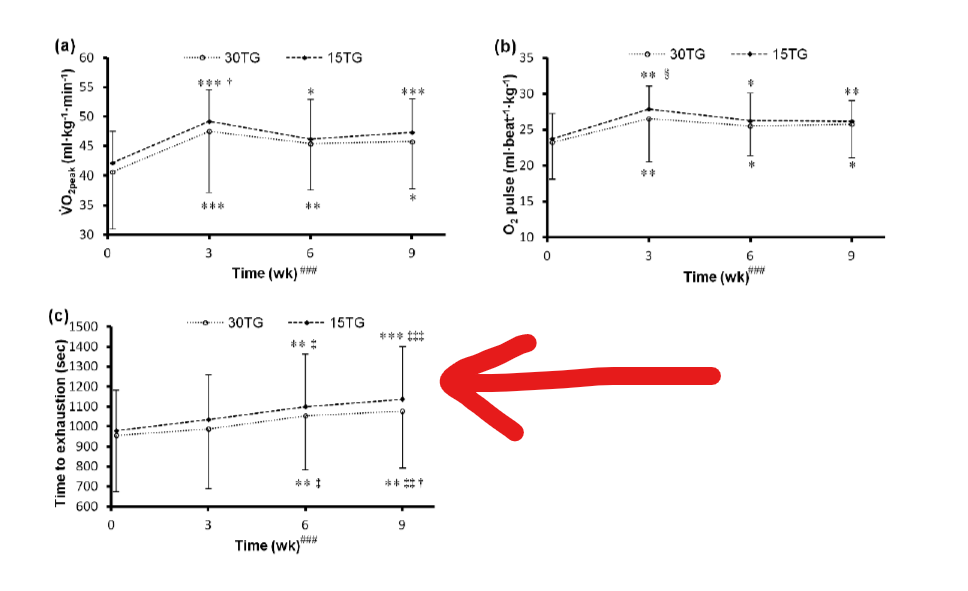
It shows that even when the protocol doesn't change, gains can still be made in conditioning. But we can make near infinite gains when changing the sprint protocol every so often such as changing work interval and rest times, and number of sets.
When we change the SIT protocol, we get a new stimulus to continuing spurring progress.
When Does Zone 2 Cardio Become Useful?
I see 2 main uses for zone 2 cardio for MMA.
- •The first phase of training after a fight. This allows you to move, get low-intensity exercise done, and recover from a strenuous preparation and fight.
- •During the weight cut process. You don't want any intensity here.
That's where I see zone 2 as most beneficial. And look, you can take a zone 2 approach to your out of and in camp preparation. But finding the time to do that kind of volume on top of technical training is challenging and you may be better off using a shorter, more intense approach.
References
- •James, L. P., Beckman, E. M., Kelly, V. G., & Haff, G. G. (2017). The neuromuscular qualities of higher-and lower-level mixed-martial-arts competitors. International journal of sports physiology and performance, 12(5), 612-620.
- •James, L. P., Haff, G. G., Kelly, V. G., & Beckman, E. M. (2018). Physiological determinants of mixed martial arts performance and method of competition outcome. International Journal of Sports Science & Coaching, 13(6), 978-984.
- •James, L. P., Connick, M., Haff, G. G., Kelly, V. G., & Beckman, E. M. (2020). The countermovement jump mechanics of mixed martial arts competitors. The Journal of Strength & Conditioning Research, 34(4), 982-987.
- •De Oliveira, S. N., Follmer, B., De Moraes, M. A., Dos Santos, J. O. L., Bezerra, E. D. S., Gonçalves, H. J. C., & Rossato, M. (2015). Physiological profiles of North Brazilian mixed martial artists (MMA). Journal of Exercise Physiology Online, 18(1), 56-61.
- •Schick, M. G., Brown, L. E., Coburn, J. W., Beam, W. C., Schick, E. E., & Dabbs, N. C. (2010). Physiological profile of mixed martial artists. Medicina Sportiva, 14(4), 182-187.
- •UFC Performance Institute.
- •Hue, O., Gallais, D. L., Chollet, D., & Prefaut, C. (2000). Ventilatory threshold and maximal oxygen uptake in present triathletes. Canadian Journal of Applied Physiology, 25(2), 102-113.
- •Alm, P., & Yu, J. (2013). Physiological characters in mixed martial arts. Am J Sports Sci, 1(2), 12-17.
- •Lovell, D. I., Bousson, M., & McLellan, C. (2013). The use of performance tests for the physiological monitoring of training in combat sports: A case study of a world ranked mixed martial arts fighter. J Athl Enhancement, 2(1), 2-6.
- •Tota, Ł., Drwal, T., Maciejczyk, M., Szyguła, Z., Pilch, W., Pałka, T., & Lech, G. (2014). EFFECTS OF ORIGINAL PHYSICAL TRAINING PROGRAM ON CHANGES IN BODY COMPOSITION, UPPER LIMB PEAK POWER AND AEROBIC PERFORMANCE OF A MIXED MARTIAL ARTS FIGHTER. Medicina Sportiva, 18(2).
- •Bagley, R. J., Arevalo, A. J., Malyszek, K. K., Spencer, A. J., Rosengarten, J., Barillas, S. R., ... & Galpin, A. J. (2016). Skeletal muscle phenotype and performance of an elite mixed martial artist. Medicine and Science in Sports and Exercise; Lippincott Williams & Wilkins: Philadelphia, PA, USA.
- •Jakovljević, D. K., Eric, M., Jovanovic, G., Dimitric, G., Cupic, M. B., & Ponorac, N. (2018). Explosive muscle power assessment in elite athletes using wingate anaerobic test. Revista Brasileira de Medicina do Esporte, 24(2), 107-111.
- •Gacesa, J. Z. P., Barak, O. F., & Grujic, N. G. (2009). Maximal anaerobic power test in athletes of different sport disciplines. The Journal of Strength & Conditioning Research, 23(3), 751-755.
- •Del Vecchio, F. B., Hirata, S. M., & Franchini, E. (2011). A review of time-motion analysis and combat development in mixed martial arts matches at regional level tournaments. Perceptual and Motor Skills, 112(2), 639-648.
- •Miarka, B., Vecchio, F. B., Camey, S., & Amtmann, J. A. (2016). Comparisons: technical-tactical and time-motion analysis of mixed martial arts by outcomes. Journal of strength and conditioning research, 30(7), 1975-1984.
- •Komi, P. V. (1986). Training of muscle strength and power: interaction of neuromotoric, hypertrophic, and mechanical factors. International journal of sports medicine, 7(S 1), S10-S15.
- •Kraemer, W. J., & Newton, R. U. (2000). Training for muscular power. Physical medicine and rehabilitation clinics of North America, 11(2), 341-368.
- •Turner, A. N. (2009). Strength and conditioning for Muay Thai athletes. Strength & Conditioning Journal, 31(6), 78-92.
- •Cormie, P., McGuigan, M. R., & Newton, R. U. (2011). Developing maximal neuromuscular power: Part 1-Biological basis of maximal power production. Sports medicine, 41, 17-38.
- •Pallarés, J. G., Hernández‐Belmonte, A., Martínez‐Cava, A., Vetrovsky, T., Steffl, M., & Courel‐Ibáñez, J. (2021). Effects of range of motion on resistance training adaptations: A systematic review and meta‐analysis. Scandinavian journal of medicine & science in sports, 31(10), 1866-1881.
- •Brughelli, M., & Cronin, J. (2007). Altering the length-tension relationship with eccentric exercise: implications for performance and injury. Sports Medicine, 37, 807-826.
- •Brooks, G. A. (2018). The science and translation of lactate shuttle theory. Cell metabolism, 27(4), 757-785.
- •Usher, A., & Babraj, J. (2024). Use of NIRS to explore skeletal muscle oxygenation during different training sessions in professional boxing. European Journal of Applied Physiology, 124(2), 595-606.
- •Thébault, N., Léger, L. A., & Passelergue, P. (2011). Repeated-sprint ability and aerobic fitness. The Journal of Strength & Conditioning Research, 25(10), 2857-2865.
- •Sanders, G. J., Turner, Z., Boos, B., Peacock, C. A., Peveler, W., & Lipping, A. (2017). Aerobic capacity is related to repeated sprint ability with sprint distances less than 40 meters. International journal of exercise science, 10(2), 197.
- •Aziz, A. R., Chia, M., & Teh, K. C. (2000). The relationship between maximal oxygen uptake and repeated sprint performance indices in field hockey and soccer players. Journal of sports medicine and physical fitness, 40(3), 195.
- •Gabbett, T. J., & Wheeler, A. J. (2015). Predictors of repeated high-intensity-effort ability in rugby league players. International Journal of Sports Physiology and Performance, 10(6), 718-724.
- •Johnston, R. D., & Gabbett, T. J. (2011). Repeated-sprint and effort ability in rugby league players. The Journal of Strength & Conditioning Research, 25(10), 2789-2795.
- •Hellsten, Y., & Gliemann, L. (2024). Peripheral limitations for performance: Muscle capillarization. Scandinavian Journal of Medicine & Science in Sports, 34(1), e14442.
- •Lievens, E., Klass, M., Bex, T., & Derave, W. (2020). Muscle fiber typology substantially influences the time to recover from high-intensity exercise. Journal of applied physiology, 128(3), 648-659.
- •Sienkiewicz-Dianzenza, E., & Maszczyk, Ł. (2019). The impact of fatigue on agility and responsiveness in boxing. Biomedical Human Kinetics, 11(1), 131-135.
- •Singh, A., Boyat, A. V., & Sandhu, J. S. (2015). Effect of a 6 week plyometric training program on agility, vertical jump height and peak torque ratio of Indian Taekwondo players. Sport Exerc Med Open J, 1(2), 42-46.
- •Zemková, E., & Hamar, D. (2014). Agility performance in athletes of different sport specializations. Acta Gymnica, 44(3), 133-140.
- •Zemková, E. (2016). Differential contribution of reaction time and movement velocity to the agility performance reflects sport-specific demands. Human movement, 17(2), 94-101.
- •Young, W. B., Dawson, B., & Henry, G. J. (2015). Agility and change-of-direction speed are independent skills: Implications for training for agility in invasion sports. International Journal of Sports Science & Coaching, 10(1), 159-169.
- •Farrow, D., Young, W., & Bruce, L. (2005). The development of a test of reactive agility for netball: a new methodology. Journal of Science and Medicine in Sport, 8(1), 52-60.
- •Gabbett, T., & Benton, D. (2009). Reactive agility of rugby league players. Journal of science and medicine in sport, 12(1), 212-214.
- •Carlon, T., Young, W., Berry, J., & Burnside, C. (2013). Association between perceptual agility skill and australian football performance. Journal of Australian Strength and Conditioning, 21(1), 42-44.
- •Williams, A. M., & Davids, K. (1998). Visual search strategy, selective attention, and expertise in soccer. Research quarterly for exercise and sport, 69(2), 111-128.
- •Henry, G., Dawson, B., Lay, B., & Young, W. (2012). Effects of a feint on reactive agility performance. Journal of sports sciences, 30(8), 787-795.
- •Jackson, R. C., Warren, S., & Abernethy, B. (2006). Anticipation skill and susceptibility to deceptive movement. Acta psychologica, 123(3), 355-371.
- •Freitas, S. R., Mendes, B., Le Sant, G., Andrade, R. J., Nordez, A., & Milanovic, Z. (2018). Can chronic stretching change the muscle‐tendon mechanical properties? A review. Scandinavian journal of medicine & science in sports, 28(3), 794-806.
- •Konrad, A., & Tilp, M. (2014). Increased range of motion after static stretching is not due to changes in muscle and tendon structures. Clinical biomechanics, 29(6), 636-642.
- •Hargreaves, M., & Spriet, L. L. (2020). Skeletal muscle energy metabolism during exercise. Nature metabolism, 2(9), 817-828.
- •Gaitanos, G. C., Williams, C., Boobis, L. H., & Brooks, S. (1993). Human muscle metabolism during intermittent maximal exercise. Journal of applied physiology, 75(2), 712-719.
- •Glaister, M. (2005). Multiple sprint work: physiological responses, mechanisms of fatigue and the influence of aerobic fitness. Sports medicine, 35, 757-777.
- •Hamilton, A. L., Nevill, M. E., Brooks, S., & Williams, C. (1991). Physiological responses to maximal intermittent exercise: Differences between endurance‐trained runners and games players. Journal of sports sciences, 9(4), 371-382.
- •Granier, P., Mercier, B., Mercier, J., Anselme, F., & Prefaut, C. (1995). Aerobic and anaerobic contribution to Wingate test performance in sprint and middle-distance runners. European journal of applied physiology and occupational physiology, 70(1), 58-65.
Get The MMA Blueprint
Download our free strength & conditioning program designed specifically for MMA athletes.
Get Free Blueprint
